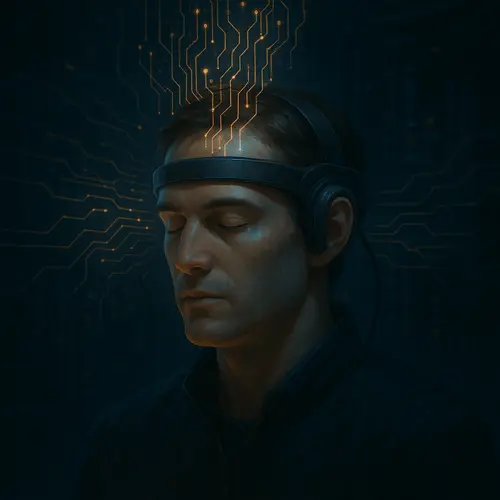
🧠 Introduction: Rewiring Reality
Imagine controlling a computer with your thoughts. Not through a keyboard or screen—but directly from your mind. What once sounded like pure science fiction is now emerging science. Neural interfaces, or brain-computer interfaces (BCIs), are rapidly reshaping how we think about interaction, identity, and intelligence.
As humans and machines begin to blur, we’re not just upgrading technology—we’re evolving what it means to be human.
🔬 What Are Neural Interfaces?
Neural interfaces are systems that create direct communication pathways between the brain and external devices. This connection can be invasive (implanted electrodes) or non-invasive (EEG headsets), allowing the brain to send or receive digital signals.
At their core, BCIs bypass traditional input methods and translate brain activity into commands—enabling users to control prosthetics, communicate without speech, or interact with software using pure thought.
📈 The Current State of the Tech
- Medical BCIs: Used to help paralyzed individuals move robotic limbs or communicate via synthetic speech generators.
- Non-Invasive Devices: Companies like NextMind, Neurable, and Kernel are creating consumer-friendly BCIs for gaming, wellness, and cognitive enhancement.
- Neuralink: Elon Musk’s startup is developing high-bandwidth implants aimed at eventually merging humans with AI.
The hardware is getting smaller. The signal processing is getting smarter. What was once laboratory science is edging toward mass adoption.
🧬 How Do Neural Interfaces Work?
The brain generates electrical activity through neurons. BCIs detect these signals—via scalp electrodes or implanted arrays—and use algorithms to interpret them. These digital interpretations can then control software, robotics, or even other neural systems.
Some systems offer bidirectional communication, not just reading the brain but also stimulating it—opening doors to memory enhancement, emotional modulation, and neuroplastic reprogramming.
⚙️ What We Can Do—Already
- Move a cursor on a screen with thought alone
- Play games using neural intention instead of controllers
- Restore limited motor function in spinal injury patients
- Detect early signs of neurological disease using neural biomarkers
This isn’t a future dream—it’s happening now. The question is: what happens when these systems scale?
🤖 The Merge: Human and AI as One
One of the boldest visions is the cognitive symbiosis between human minds and artificial intelligence. With high-bandwidth BCIs, we could:
- Search the web by thought
- Translate language instantly, in our heads
- Download new skills directly into working memory
- Collaborate with AI as cognitive co-pilots
This fusion could make us super-intelligent—or fundamentally altered. We’d become hybrid beings, blending biology and machine.
⚖️ Ethical and Psychological Concerns
Neural interfaces don’t just raise technical challenges—they provoke deep ethical questions:
- Privacy: Who owns your thoughts if they’re digitized?
- Autonomy: Could bad actors manipulate neural input?
- Access: Will only the wealthy afford cognitive upgrades?
- Selfhood: Are you still you if your thoughts are shared with machines?
The brain is the last private frontier. BCIs may rewrite the rules of identity and agency.
🧠 The Plastic Mind Meets Plastic Circuits
The beauty of the brain is its plasticity—its ability to adapt, rewire, and grow. Neural interfaces may accelerate this plasticity, giving rise to brain states we’ve never known. Meditation-on-demand. Instant creativity. Emotional reset buttons. The possibilities border on the mythic.
But we must tread carefully. With great bandwidth comes great responsibility.
🚀 What’s Next?
- Faster, safer implants—tiny, wireless, biocompatible
- Non-invasive high-resolution EEG for mass market
- AI-driven personalization of cognitive augmentation
- Cloud-connected brain networks—neural collectives?
The race is on—not just to build the tech, but to guide its impact.
📘 Final Thoughts
Neural interfaces are not just a tool—they’re a turning point. We stand at the brink of merging biological awareness with machine logic. This isn’t the end of being human. It might be the beginning of something more.
But with such power must come philosophy, ethics, and caution. The future of humanity may not be determined by what we build—but by what we choose to become when we build it.
“The brain is wider than the sky.” — Emily Dickinson