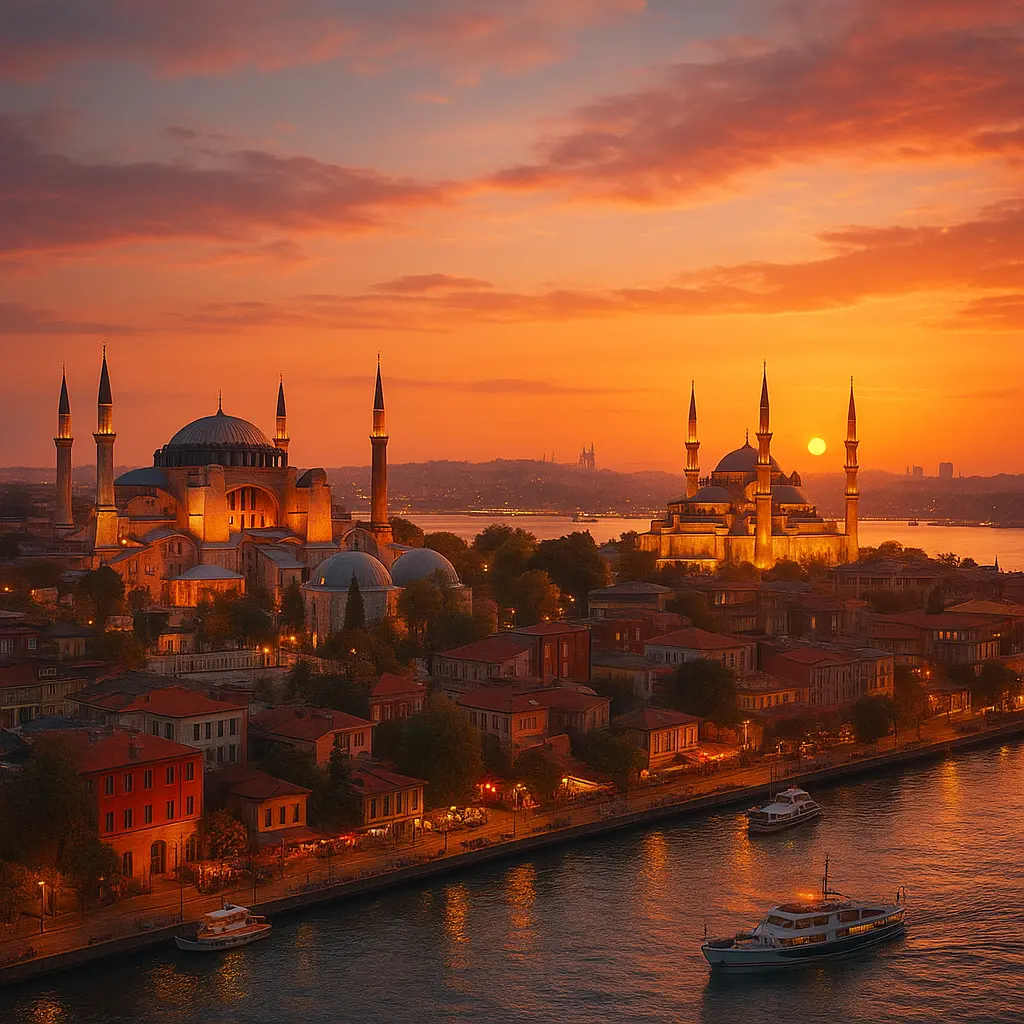
🌉 Istanbul, Türkiye — Where East Meets West: A Cultural Crossroads Travel Guide
Istanbul is a city with more than one heartbeat. One pulses through stone—Roman arches, Byzantine domes, Ottoman courtyards; the other ripples over water—the Bosphorus tightening and slackening with ferries, gulls, and the salt-smell of two seas. Between them is life: simit sellers ringing bells on street corners, the hiss of tea poured into tulip-shaped glasses, tram bells, call to prayer, jazz riffs leaking from a basement bar. Istanbul doesn’t need you to choose a side; it invites you to cross—again and again—until you realize the crossing is the city.
🏛 A Thousand Years at a Glance: The Short History You’ll Feel Underfoot
Founded as Byzantion, reborn as Constantinople, and reimagined as İstanbul, the city is a palimpsest: each era wrote in its own ink but never erased the line beneath. The Eastern Roman Empire poured genius into Hagia Sophia’s vast dome. The Ottomans crowned the skyline with mosques, laced it with bazaars and hammams, and governed an empire by the waters where Black Sea meets Marmara. The republic’s modern pulse brought trams, towers, and an irresistible creative energy. You don’t need a textbook to understand this; a single walk from Sultanahmet to Karaköy, and a ferry to Kadıköy at sunset, will do the work.
🗺 Neighborhoods: How to Read the City Like a Local
1) Sultanahmet (Old City Core)
Tour it early and unhurried. Hagia Sophia’s nave swallows sound; the Blue Mosque’s tilework hums in floral geometry; the Basilica Cistern turns columns into a forest reflected in water. Nearby, Topkapı Palace whispers of sultans and courtyards scented with rosewater. Step behind the postcard streets and you’ll find quiet lanes, cats napping on marble steps, and lokantas serving home-style stews to shopkeepers on their break.
2) Beyoğlu: Galata, Karaköy, Taksim
Beyoğlu is Istanbul’s cultural loudspeaker: record shops, galleries, third-wave coffee, meyhanes tucked under vines. Start at the Galata Tower for the panorama, slide down to Karaköy’s waterside cafés, then let İstiklal Caddesi pull you past street musicians and bookshops to Taksim. Duck into side streets for the real conversations: antique stores, meze counters, and bakeries where the air tastes like sesame and honey.
3) Balat & Fener (Golden Horn)
Steep streets, candy-colored wooden houses, Orthodox churches, and the red-brick silhouette of the Phanar Greek Orthodox College. Balat feels like a neighborhood that quilts its histories together: laundry lines, tea trays in motion, kids chasing a ball past a doorway painted lemon yellow. Come with time; your camera and your appetite will both need it.
4) Kadıköy & Moda (Asian Side)
Hop a ferry east. Kadıköy Market is a handshake: olives in dozens of shades, anchovies silvering in ice, spice piles like miniature dunes. Beyond the market, Moda curves along the sea with parks, ice-cream stands, and benches that belong to long conversations. This is the city’s living room; bring a book and a bag for things you didn’t know you wanted.
5) Üsküdar & Kuzguncuk
Üsküdar’s waterfront mosques—Mihrimah Sultan, Şemsi Paşa—read like a calm line of poetry written along the Bosphorus. North in Kuzguncuk, synagogues and churches share a village street under plane trees; bakers greet by name. Wait for golden hour at Salacak, when Maiden’s Tower becomes the period at the end of a sunlit sentence.
⛪ Landmarks That Carry the Weight (and How to See Them Well)
- Hagia Sophia: Arrive at opening. However many photos you’ve seen, the dome’s scale still steals breath. Soft steps, quiet gaze.
- Sultan Ahmed Mosque (Blue Mosque): Dress modestly, move with patience; lift your eyes to the Iznik tiles and see why the name stuck.
- Topkapı Palace: Rooms arranged like a story you wander through. Don’t skip the Harem (separate ticket) or the terrace where the Bosphorus writes its own calligraphy in light.
- Basilica Cistern: A subterranean cathedral of columns and water; find the Medusa heads, listen for droplets.
- Grand Bazaar: It’s not a mall; it’s a city inside the city. Let yourself get lost on purpose, then follow the smell of leather or soap back to daylight.
- Spice Bazaar: Saffron, sumac, lokum (Turkish delight) in rose, pistachio, pomegranate. Taste before you buy; good vendors insist.
- Dolmabahçe Palace: Nineteenth-century splendor, crystal chandeliers, a European flourish with Ottoman heart.
- Chora (Kariye): Mosaics like star maps—if open, go; if under restoration, check for partial access.
⛴ The Bosphorus: Istanbul’s Front Porch and Living Room
Buy an İstanbulkart, ride ferries as if they’re your right (they are). The shortest crossing—Eminönü to Kadıköy—delivers the whole thesis: gulls riding drafts, tea steaming in paper-cup winters, domes and high-rises sharing one sky. For a long exhale, take a full Bosphorus cruise to Anadolu Kavağı—sea, palaces, yalıs (waterfront mansions), fortresses—and late lunch with a fish that was salt an hour ago. Back in the center, sit a while on the Galata Bridge: fishermen, vendors, postcard dusk.
🍽 Eat Like You Mean It: Breakfast Tables, Street Carts, and Meze Nights
Kahvaltı (Breakfast)
Order once; breakfast is a landscape: cheeses, olives, tomatoes, cucumbers, eggs, honey with clotted cream, jams, simit, and endless tea. Try Beşiktaş for bustling kahvaltı salons or a quiet table in Cihangir with a cat under the chair.
Street Food
- Simit — sesame ring bread, best still warm.
- Balık ekmek — a fish sandwich at Eminönü: lemon, onion, the taste of the strait.
- Midye dolma — stuffed mussels; squeeze lemon, eat two, then two more.
- Kokoreç — spiced grill for the adventurous; ask for crispy edges.
Meyhane Ritual
Meze first: atom (yogurt with chili butter), mashed fava, ezme, smoked eggplant, purslane yogurt, stuffed vine leaves. Then grilled fish or meat. Raki if you love anise; otherwise a crisp Thrace white. Talk, toast, linger. This is not a meal; it’s an evening.
🧖♀️ Hammams, Dervishes, and the Art of Slowing Down
- Hammam: Ottoman bathhouses are marble-and-steam time machines. Book a traditional scrub and foam; emerge newer than you arrived.
- Whirling Dervish Ceremony (Sema): A prayer in motion. Watch with quiet; let the ney flute do the explaining.
- Tea Culture: Tea is the city’s punctuation. Accept it when offered in shops; it’s hospitality, not a sales trap at reputable places.
📆 Itineraries That Flow Instead of Rush
Classic 3 Days
- Day 1 — Sultanahmet: Hagia Sophia → Blue Mosque → Basilica Cistern → Topkapı → sunset ferry to Kadıköy for meze in Moda.
- Day 2 — Beyoğlu: Galata Tower → Karaköy cafés → Spice Bazaar → Golden Horn walk → rooftop tea at dusk.
- Day 3 — Asian Side: Kadıköy Market browse → seaside Moda stroll → Üsküdar mosques at golden hour → Maiden’s Tower view.
Five Days (Deeper Threads)
- Dolmabahçe + Beşiktaş breakfast crawl.
- Balat/Fener slow day: churches, antique shops, long coffee breaks.
- Full Bosphorus cruise to Anadolu Kavağı + hike to Yoros Castle.
- Princes’ Islands escape to Büyükada (bike rentals, pine-scented roads).
🚇 Getting Around (and Avoiding Little Headaches)
- İstanbulkart: One card for tram, metro, funicular, buses, ferries. Top up at kiosks.
- Tram T1: Your friend through the Old City (Sultanahmet ↔ Karaköy).
- Funiculars: Karaköy↔Tünel and Kabataş↔Taksim: hills, solved.
- Taxis: Use BiTaksi or iTaksi apps; insist on the meter.
- Feet: The best vehicle in Istanbul. Wear shoes with opinions about cobblestones.
🧭 Etiquette & Small Cultural Notes
- In mosques: Shoulders and knees covered; women may cover hair; shoes off; move quietly.
- Greetings: “Merhaba” (hello) and “Teşekkürler” (thanks) win real smiles.
- Bargaining: In bazaars, it’s theatre plus math. Enjoy the dance; shake hands when it feels right.
- Cats: They are citizens. Greet them accordingly.
🛍 What to Bring Home (That Isn’t Dust)
- Iznik-style ceramics, hand-painted.
- Copper coffee pots (cezve) and fresh-ground Turkish coffee.
- Spices (sumac, isot pepper), good tea, lokum in metal tins.
- Pestemal hamam towels, olive oil soaps.
- Textiles: kilim cushion covers, scarves, and throws.
📸 Where Light Loves the Lens
- Galata Bridge at blue hour—mosques in silhouette, glimmering water, fishermen.
- Ortaköy Mosque with the Bosphorus Bridge sweeping behind it.
- Rooftops in Sultanahmet (ask venues first); lantern-lit courtyards in the bazaars.
- Üsküdar’s Salacak for Maiden’s Tower sunsets; Kadıköy ferries at dawn.
🌤 When to Come (and How It Feels)
- Spring (Apr–May): Blooms, soft air, Ramadan nights electric with festivity.
- Autumn (Sep–Oct): Clear light, warm evenings, perfect ferry weather.
- Summer: Heat, long nights, street life at full volume; siesta after lunch, stroll after sundown.
- Winter: Low crowds, moody skies, snow-dusted domes if you’re lucky; cafés and hammams become your itinerary.
💳 Money, Safety, Common Sense
- Currency: Turkish lira; cards widely accepted.
- Tipping: 5–10% in restaurants; round up elsewhere.
- Scams: Decline unsolicited “shoe-shine” or urgent bar invites; use official apps for taxis; choose licensed guides.
- Water: Bottled for sensitive stomachs; tea and coffee everywhere cure the rest.
🧳 Packing Checklist (City Edition)
- Layers (stone streets shift temperatures fast), comfortable walking shoes.
- Modest cover-up for mosque visits; small scarf.
- Foldable tote for market finds, reusable water bottle, power bank.
- Small umbrella or light shell; the Bosphorus writes its own weather.
🌿 Day Trips that Deepen the Story
- Princes’ Islands (Büyükada): Ferry out, rent bikes, ride under pines, admire wooden mansions, eat ice cream that tastes like a holiday.
- Belgrad Forest: Trails and lungs for the city; picnic among leaves and birdsong.
- Şile & Ağva (Black Sea): Beaches, lighthouses, and seaside meyhanes with grilled fish and slow afternoons.
🗣 Handy Turkish for Travelers
- Merhaba — Hello
- Lütfen — Please
- Teşekkürler / Teşekkür ederim — Thank you
- Ne kadar? — How much?
- Hesap lütfen — The bill, please
- Afiyet olsun — Enjoy your meal
♿ Accessibility Notes
Historic districts come with stairs and cobbles, but newer transport is step-reduced. Trams are level-entry; many ferries accommodate wheelchairs. Major sights post accessibility info—check before you go, and favor the tram over steeper pedestrian routes in the Old City.
🎭 For the Curious: Art, Design, and Night
- Istanbul Modern / Pera Museum / SALT Beyoğlu: Contemporary thought with a Bosphorus view.
- Design shops: Ceramics, textiles, and lighting that carry the city’s geometry home.
- Night: Meyhane in Asmalımescit; jazz bars in Galata; late tea on Kadıköy steps watching ferries blink like moving villages.
🧵 The Thread You’ll Take With You
Istanbul is more conversation than checklist. It talks to you in crossings—over bridges, across the strait, between centuries stitched into one street. You arrive certain you are visiting a city and leave suspecting the city has visited you: pressed you between water and stone, taught you tea time, taught you to walk slowly past cats and tiles, taught you what happens when borders turn into invitations.
Cross once for the view. Cross again for the feeling. Cross a third time and understand you belong to both shores.