📱 Introduction: The Dopamine Dilemma
Modern life is saturated with micro-rewards—likes, swipes, alerts, and notifications that feel good but quietly steal our time and mental energy. Behind it all is dopamine, the brain's motivation and pleasure chemical. Originally meant to help us survive, it's now being hijacked by algorithms and infinite scrolls.
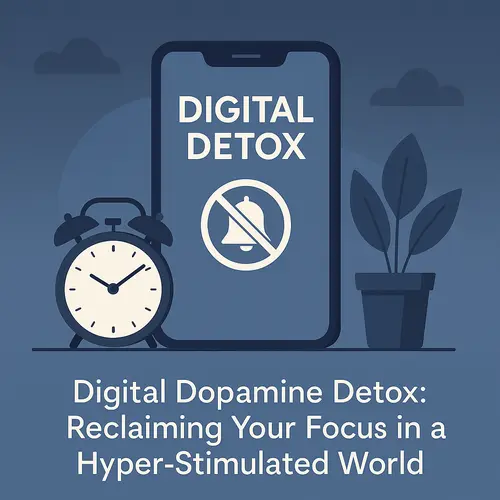
We are not addicted to phones. We’re addicted to the dopamine loops they create. Escaping them doesn’t require abandoning tech—it requires reclaiming control. This is where the concept of a Digital Dopamine Detox comes in.
🧠 What Is Dopamine and Why It Matters
Dopamine isn't about pleasure—it's about pursuit. It drives anticipation and action. When we check our phones obsessively, we’re not seeking pleasure but chasing unpredictable rewards—much like slot machines.
Neuroscientists call this the "novelty reward circuit." The more unpredictable the outcome (Will I have a new message? A like? A retweet?), the more dopamine is released. Over time, this loop erodes our baseline ability to focus, reflect, and rest.
📉 Symptoms of Dopamine Overload
- Constant urge to check notifications—even when nothing buzzed
- Shortened attention span during conversations or reading
- Restlessness when offline, even briefly
- Decreased motivation for long-term goals
- Mental fatigue despite little physical exertion
If any of these sound familiar, your dopamine system might be overstimulated.
🧹 What Is a Digital Dopamine Detox?
A dopamine detox isn’t about removing all pleasure. It’s about resetting your reward system so that high-stimulation inputs no longer dull your senses. The detox doesn’t punish the brain—it rebalances it.
It allows your mind to re-appreciate simple rewards—like reading a book, sitting in silence, or completing a task without interruption.
🛠️ Step-by-Step Guide to Your First Detox
1. Choose a Duration
Start small—just 24 hours of intentional disconnection. Gradually work up to weekend resets or weekly "low-stimulation" evenings.
2. Identify High-Dopamine Triggers
Write down which activities make your brain crave more (e.g., TikTok, YouTube, Reddit, Twitter, constant messaging). These are the ones to pause.
3. Replace with Low-Dopamine Alternatives
Swap phone time with journaling, sketching, walking, organizing, or longform reading. Let your mind rest in slower, analog rhythms.
4. Go Gray, Not Black
You don’t have to live in silence. Listen to ambient music. Take a walk. Have deep conversations. The goal isn’t boredom—it’s balance.
📚 The Neuroscience of Resetting
In studies at Stanford and MIT, participants who avoided high-dopamine behaviors for just two days showed:
- Improved emotional regulation
- Increased gray matter in areas linked to attention
- Better sleep and deeper mental clarity
It takes roughly 48–72 hours for dopamine receptor sensitivity to start resetting. Even short breaks from digital noise have measurable effects.
🚫 Why Total Abstinence Fails
All-or-nothing detoxes usually backfire. They treat technology like poison instead of understanding it as a tool. Dopamine isn’t the villain—it’s just overused.
The goal is to train your attention, not hate your devices.
🧘♂️ The Power of Intentional Use
Instead of opening your phone reactively, ask: “Why am I doing this?” Train your brain to pause. Insert intention before stimulation.
- Use scheduled check-ins (e.g., 3x/day)
- Turn phone grayscale or disable push alerts
- Keep your home screen minimal—no dopamine apps front and center
🌱 What Happens After the Detox
After a digital dopamine detox, many report:
- Reclaiming joy in offline activities
- Sharper attention span and increased mental clarity
- Stronger control over urges and impulses
- More meaningful relationships and conversations
💡 A Sustainable Digital Life
You don’t need to disappear into a cabin or delete all your apps. Just create spaces—daily, weekly, and seasonally—where your brain can recalibrate. Over time, you’ll find it easier to resist distractions because your brain isn’t starved for stimulation.
📘 Final Reflection
Your attention is your life. It’s how you love, learn, create, and become. If you let the world hijack your dopamine system, you outsource your joy, your growth, and your peace.
Detox isn’t about control. It’s about coming home to your mind.
“You will never reach your destination if you stop to throw stones at every dog that barks.” — Winston Churchill