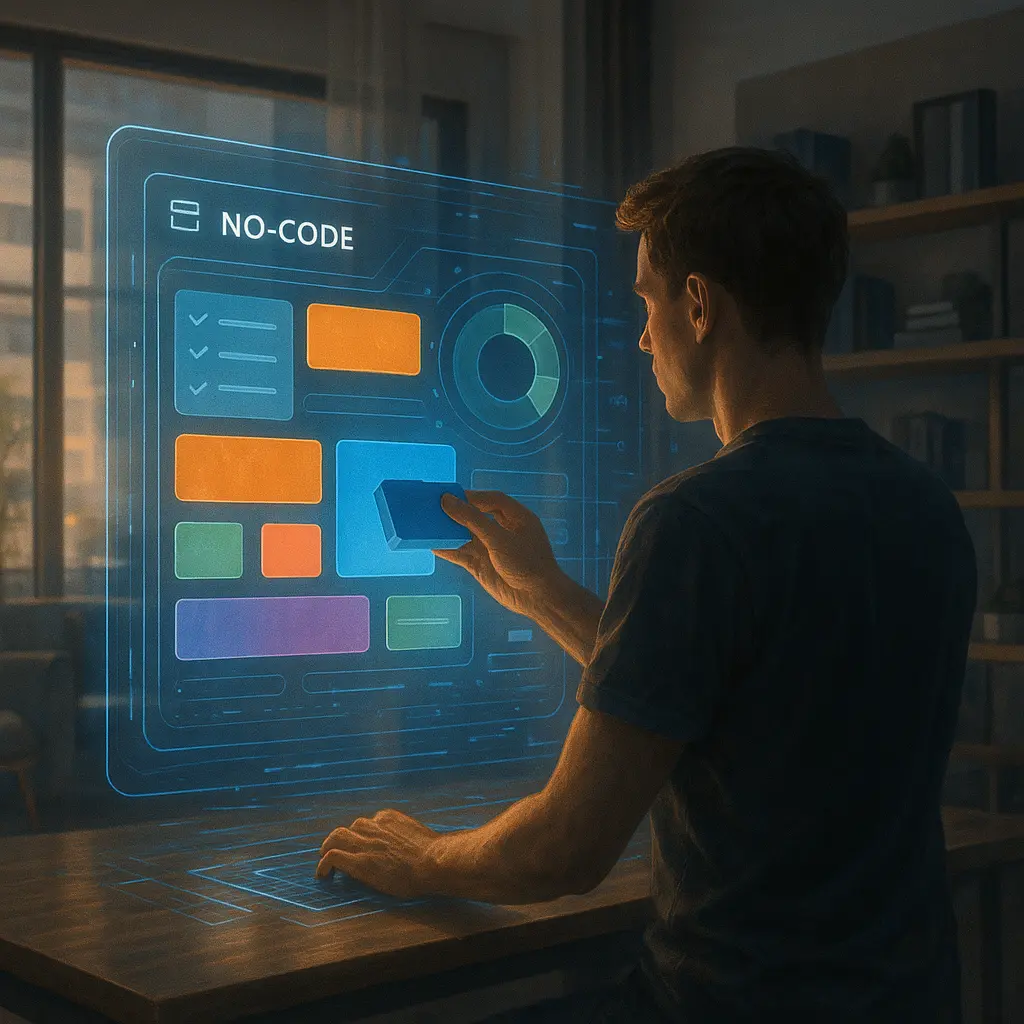
🧰 Introduction: The No-Code Revolution Is Here
For decades, building apps, websites, or automations meant one thing: learning to code. But in 2025, that assumption is rapidly dissolving. A new era has arrived—one where creators, entrepreneurs, and teams can build powerful digital products without writing a single line of code.
This is the rise of no-code tools: intuitive, visual platforms that let anyone prototype, publish, and automate in hours—not weeks. And it’s not just for hobbyists anymore. Startups, enterprise teams, and solo creators are embracing no-code as a core strategy.
🛠️ What Are No-Code Tools?
No-code tools allow users to build digital products using visual interfaces. Think drag-and-drop builders, prebuilt logic blocks, and database connectors—all wrapped in user-friendly design. These platforms abstract away traditional programming complexity.
They’re not just toy tools either. Modern no-code solutions support:
- Custom workflows
- Dynamic content
- API integrations
- User authentication
- Automation logic
In short, no-code is not about doing less—it’s about doing more, faster.
🚀 Why No-Code Is Exploding in 2025
- Speed: Build MVPs in days, not months.
- Accessibility: Empower designers, marketers, educators, and founders to create independently.
- Lower Costs: Fewer developers means leaner budgets.
- Remote Collaboration: Teams globally build on the same canvas—without needing Git or CLI tools.
- AI Integration: No-code tools now include AI suggestions, logic generation, and voice-based builders.
🌟 Top No-Code Tools in 2025
- Webflow: Build professional websites with CMS power and pixel-perfect design.
- Bubble: Create complex web apps with database and backend logic—no code needed.
- Notion + Super: Turn Notion pages into websites with custom domains and style.
- Glide: Build mobile apps from Google Sheets in minutes.
- Zapier + Make: Automate workflows between your favorite apps.
- Airtable: A database meets spreadsheet meets app builder. Extremely versatile.
- Thunkable: Drag-and-drop builder for cross-platform mobile apps.
- Softr: Create web apps and client portals using Airtable or Google Sheets as a backend.
🤖 The Role of AI in No-Code Platforms
2025’s no-code tools aren’t just visual—they’re smart. AI features now assist with:
- Auto-generating UI based on prompts
- Suggesting logic flows or formulas
- Debugging and optimization tips
- Natural language automation (e.g., “When I receive a form, email me and update Airtable”)
This synergy between no-code and AI lowers the barrier even further—and sparks creative builds that were once unimaginable for non-coders.
🏗️ What You Can Build with No-Code in 2025
- Internal dashboards for businesses
- Marketplaces and eCommerce stores
- Membership portals and gated content sites
- Booking systems and CRMs
- Mobile apps with real-time features
- Automated workflows across SaaS platforms
- Community platforms and forums
If it runs on logic, a no-code platform probably exists to build it.
⚖️ Limitations (And When to Go Low-Code)
No-code has its limits—especially when:
- Highly customized backend logic is needed
- Scaling demands exact performance tuning
- Security and compliance must be tightly controlled
- Real-time multiplayer or complex AI tasks are involved
In these cases, “low-code” platforms like OutSystems or Retool provide the best of both worlds: visual flow plus coding hooks.
🌍 The Democratization of Development
No-code is not about replacing developers. It’s about empowering more people to create. Developers can still build the complex core—while other team members ship pages, workflows, and iterations in parallel.
This shift distributes power. It turns passive tech consumers into active digital creators. In 2025, every team member can now be a builder.
📘 Final Thoughts
No-code is more than a trend. It’s a mindset shift. One where technology bends to the will of the many—not just the technically elite.
Whether you’re a solo creator, startup founder, marketer, or student—no-code opens a door. Behind it? Speed, experimentation, independence, and the future of building itself.
“The future belongs to the builders. And now, everyone is a builder.”